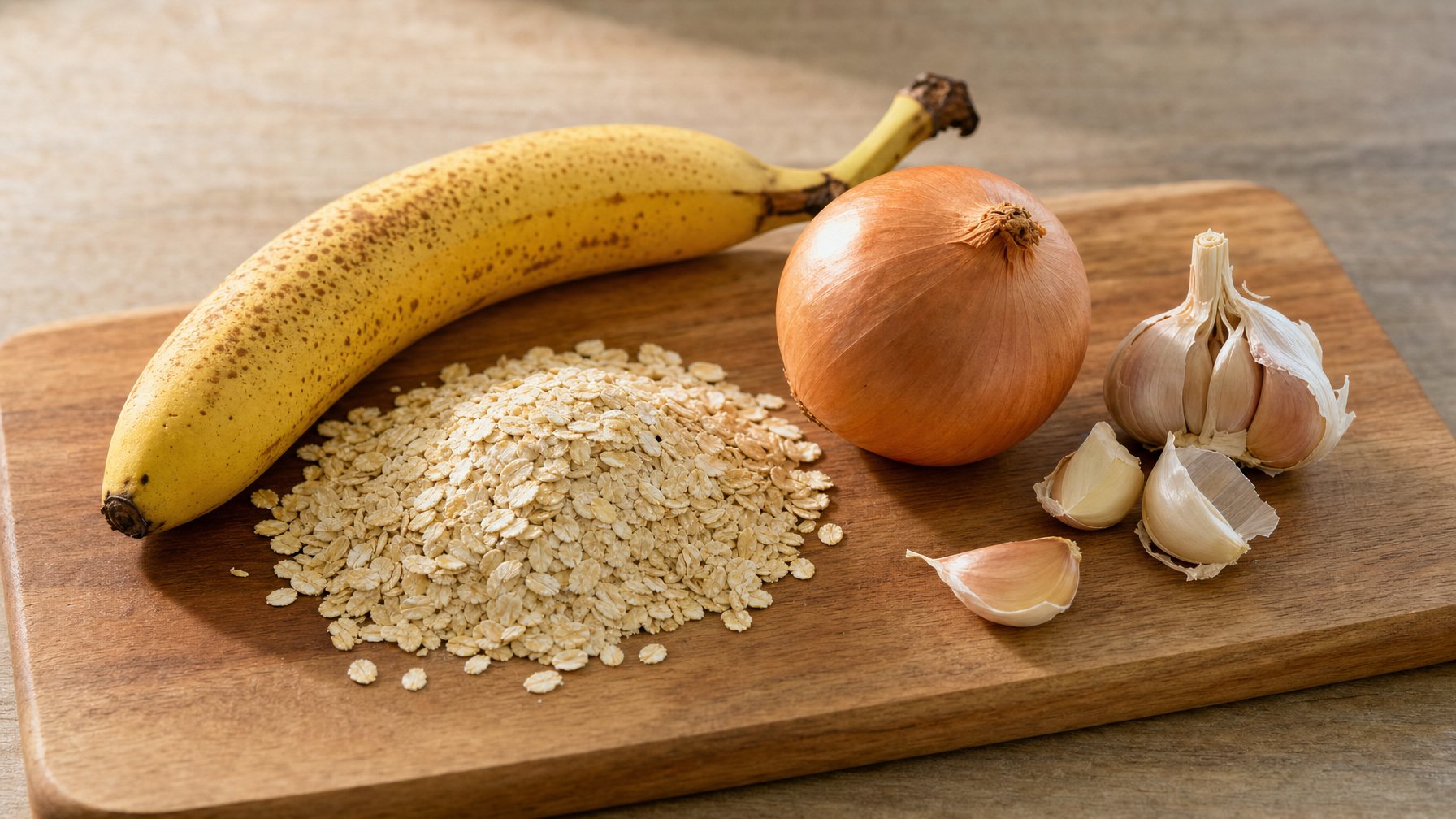
The human gut houses roughly 100 trillion microorganisms, mostly bacteria, and those microbes need fuel. Prebiotics supply it. They are the non-digestible carbohydrate fractions in plants that survive the small intestine, reach the colon, and get fermented by beneficial gut bacteria.
Anyone starting out can cover most of the ground with a short list: garlic, onions, leeks, asparagus, oats, barley, legumes, slightly green bananas, and cooked-then-cooled potatoes. Those foods deliver inulin, fructo-oligosaccharides, resistant starch, and beta-glucan, which is a wider spread of fibers than any single supplement provides.
Prebiotic foods for gut health work differently from probiotics. Probiotics are live cultures in yogurt, kefir, and sauerkraut; prebiotics feed the bacteria already living in the colon. Both belong in a diet aimed at digestive health, and neither replaces the other.
One practical note before the list: adding fiber quickly is the most common reason people abandon the effort. Gas and bloating during the first couple of weeks reflect microbial adaptation, and pacing solves most of it.
Key Takeaways
- Prebiotic fibers such as inulin, FOS, GOS, and resistant starch feed gut bacteria that produce short-chain fatty acids like butyrate.
- Everyday foods (alliums, oats, legumes, green bananas, cooled potatoes) supply prebiotics without supplements.
- Increase fiber slowly and rotate plant sources to limit gas and bloating while the microbiome adjusts.
How Prebiotic Fiber Supports the Gut Microbiome
Prebiotic fiber reaches the colon intact and gets fermented into short-chain fatty acids, which nourish colon cells and influence the gut barrier, immune signaling, and metabolic markers. The specific fibers involved (inulin, oligosaccharides, resistant starch, pectin, beta-glucan) each favor slightly different bacterial groups, which is why variety beats repetition.
What Makes a Fiber Prebiotic?
Not every dietary fiber qualifies. According to the International Scientific Association for Probiotics and Prebiotics, a substance counts as a prebiotic only if it resists digestion, is fermented by gut microbiota, and produces a measurable health benefit for the host.
That definition rules out most insoluble fiber, such as the bulk in wheat bran, which adds stool weight without much fermentation. It clearly includes fructooligosaccharides (FOS), inulin, and galacto-oligosaccharides (GOS), the three fibers researchers treat as universally agreed-upon prebiotics.
Soluble fibers like pectin from apples and beta-glucans from oats and barley ferment well too. Resistant starch, found in cooled potatoes and green bananas, behaves similarly despite being a starch.
Prebiotics vs. Probiotics: What Is the Difference?
| Prebiotics | Probiotics | |
|---|---|---|
| What they are | Non-digestible fibers | Live bacteria and yeasts |
| Food examples | Garlic, oats, legumes | Yogurt, kimchi, kombucha |
| Role in the gut | Feed existing bacteria | Add microbes to the population |
| Heat stable | Yes | No, cooking kills cultures |
| Typical dose form | Grams of fiber | Colony-forming units |
Harvard Health describes prebiotics and probiotics as working in tandem: one supplies nutrition, the other supplies organisms.
How Fermentation Produces Short-Chain Fatty Acids
Bifidobacteria and lactobacilli break down inulin and oligosaccharides through fermentation, releasing acetate, propionate, and butyrate along with hydrogen and carbon dioxide. Butyrate is the primary energy source for colonocytes, the cells lining the colon.
Prebiotic fibers act as carbon sources for primary and secondary fermentation pathways in the colon. The gas byproducts explain the bloating some people notice early on.
Potential Benefits for Digestion, Immunity, and Metabolic Health
Research links higher prebiotic intake with improved intestinal absorption of dietary calcium, better blood sugar control, immune function, and a reduced risk of colorectal cancer. Calcium absorption connects to bone health and osteoporosis risk, an area still under active study.
One trial found that people eating 30 grams daily of inulin-rich foods for two weeks were more likely to choose medium- to low-calorie foods, with MRI scans showing less reward-network activation in response to high-calorie images. That points toward a role in weight management, though the evidence base remains early.
These are associations from ongoing research, not treatment claims, and a clinician can advise on individual circumstances.
Which Foods Are the Best Sources of Prebiotics?
Garlic, onions, leeks, asparagus, Jerusalem artichokes, bananas, oats, whole grains, and soybeans rank among the best prebiotic food sources available in any American supermarket. Chicory root carries the highest inulin concentration of any common plant, which is why it appears in fiber-fortified bars and coffee substitutes.
Alliums and Roots: Garlic, Onions, Leeks, and Chicory
The allium family delivers inulin and FOS in small serving sizes. Raw garlic contains allicin alongside its prebiotic fiber; cooking reduces allicin but leaves the fiber largely intact, since inulin tolerates heat.
Onions and shallots work in nearly every savory dish, which makes them the easiest daily addition. Leeks bring a milder flavor and pair well with potato soups.
Chicory root is the concentrated option. It shows up as chicory root fiber on ingredient labels and in roasted chicory coffee, common in New Orleans-style blends.
High-Inulin Vegetables: Jerusalem Artichokes and Dandelion Greens
Jerusalem artichokes (sold as sunchokes) are among the densest whole-food inulin sources, and analysts have named onions and dandelion greens among the top prebiotic-rich foods. Sunchokes have earned a nickname involving flatulence for good reason: a half-cup portion is a meaningful first serving.
Dandelion greens go bitter when large, so smaller leaves suit salads better. Burdock root and yacon root appear in Asian and South American markets. Jicama offers inulin in a crunchy, mild form that works raw with lime and chili.
Asparagus contains inulin as well, with the highest content in fresh, in-season spears.
Fruits and Starches: Green Bananas, Apples, and Cooled Potatoes
Slightly green bananas hold resistant starch that converts to sugar as they ripen, so the greener the fruit, the more prebiotic starch it carries. Apples supply pectin, concentrated in the skin.
Cooked and cooled potatoes form retrograded resistant starch during chilling. Potato salad made a day ahead delivers more prebiotic starch than a hot baked potato; the same holds for cooled rice and pasta.
Berries and citrus fruits add pectin plus polyphenols and antioxidants, compounds gut bacteria also metabolize.
Whole Grains, Seeds, and Legumes for Diverse Fibers
Oats and barley supply beta-glucan fiber. Overnight oats combine beta-glucan with resistant starch from the uncooked grain, making them one of the most efficient prebiotic breakfasts.
Legumes cover GOS territory. Lentils, chickpeas, black beans, and green peas all contribute, and canned versions rinsed well work fine.
Flaxseeds and chia seeds provide mucilage, a gel-forming soluble fiber. Wheat bran adds mostly insoluble bulk, useful for regularity if less fermentable.
Other Plant Foods With Prebiotic Potential
Cabbage, mushrooms, and cocoa all feed gut microbes through fibers or polyphenols. Dark chocolate at 70% cacao or above delivers the most polyphenols per serving.
Seaweed contains fucoidan and alginate, fibers that gut bacteria ferment. Konjac root supplies glucomannan, the basis for shirataki noodles. Honey contains small amounts of oligosaccharides, though the quantities are modest compared with vegetables.