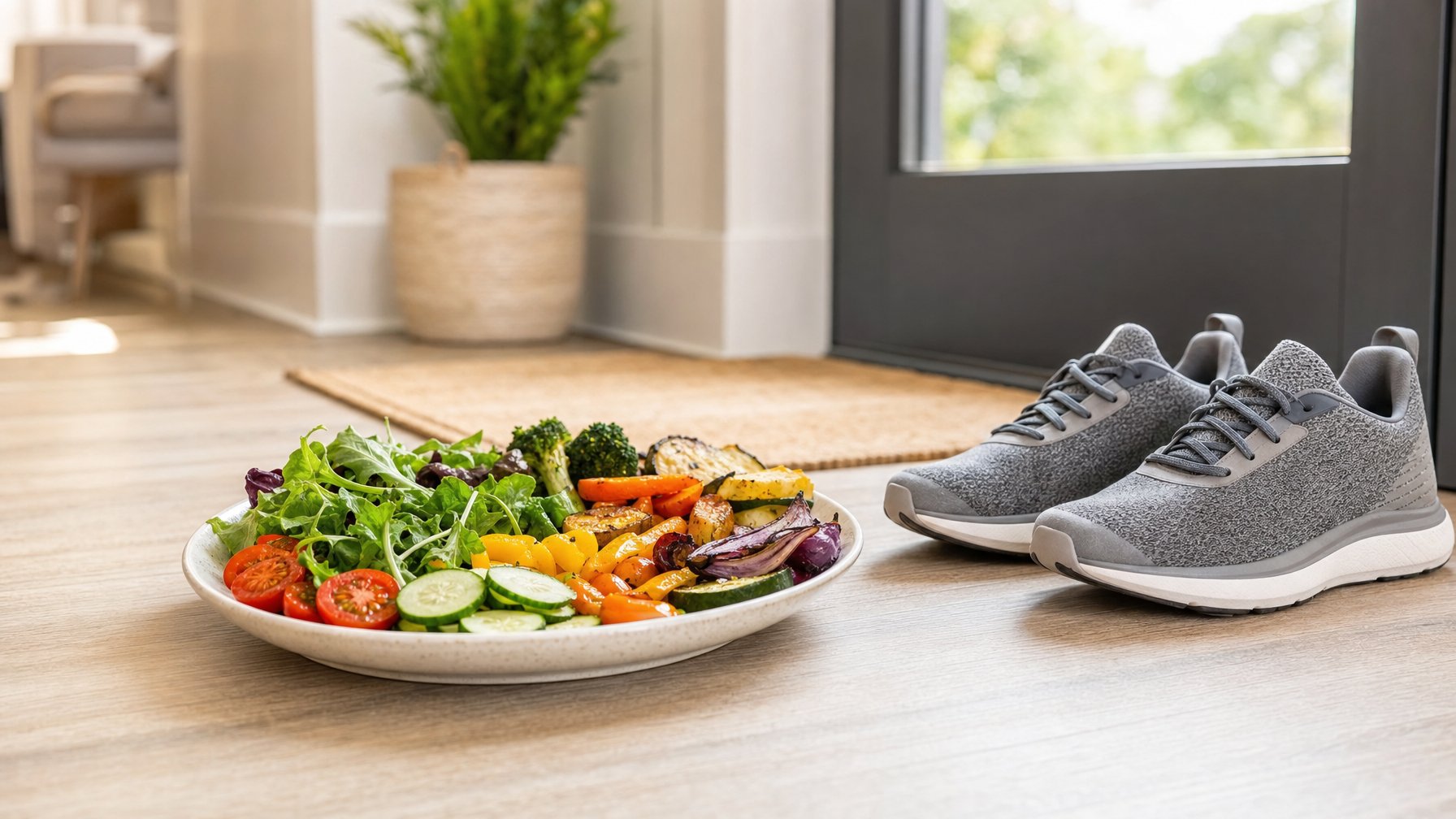
The digestive tract does more than break down meals. It houses trillions of microorganisms that help produce certain nutrients, influence immune function, and shape how comfortable a person feels after eating. Everyday choices around food, movement, sleep, and stress steadily shift that ecosystem in one direction or another.
Most of the meaningful progress in gut health comes from unglamorous repetition: eating a wide range of plants, drinking enough water, moving daily, and protecting sleep, sustained over months rather than perfected in a week. Research on how diet and lifestyle habits affect gut health consistently points to cumulative patterns over single interventions.
There is no single test that declares a microbiome "healthy," and no food that repairs one overnight. What the evidence does support is that gut bacteria respond to what they are fed, and that digestion responds to the rhythms a person keeps around meals.
Key Takeaways
- A varied, plant-heavy diet with fiber, prebiotics, and fermented foods supports microbial diversity better than any single supplement.
- Hydration, daily movement, consistent sleep, and stress management influence digestion through the gut-brain axis and gut motility.
- Persistent pain, bleeding, or unexplained weight loss warrants a clinician's evaluation, not another dietary experiment.
Build Meals That Feed a Diverse Microbiome
Diversity on the plate translates into diversity in the gut. Gut bacteria ferment the fiber and plant compounds that reach the colon, producing short-chain fatty acids that nourish the cells lining the digestive tract, so the range of plants eaten each week directly shapes which microbes thrive.
Make Fiber-Rich Whole Foods the Foundation
Fiber is the primary fuel for beneficial gut bacteria, and most Americans fall short of the 25 to 38 grams a day generally recommended for adults. Whole grains, legumes, fruits, vegetables, nuts, and seeds all contribute.
A useful framing from microbiome research is counting plant varieties instead of grams alone. Aiming for 30 or more different plants per week across six categories (vegetables, fruits, whole grains, beans and legumes, nuts and seeds, herbs and spices) is a practical target.
Cheap wins add up fast. Buying a four-bean mix instead of a single tin, or mixed seeds instead of one variety, raises plant count at no extra cost.
Use Prebiotics and Resistant Starch to Fuel Beneficial Bacteria
Prebiotics are the specific fibers that selectively feed beneficial bacteria such as Bifidobacterium and Lactobacillus. Garlic, onions, leeks, asparagus, slightly green bananas, oats, and barley are among the richest everyday sources.
Resistant starch behaves similarly, passing through the small intestine intact and fermenting in the colon. Cooking and then cooling potatoes, rice, or pasta increases their resistant starch content, and reheating does not undo the effect.
Practical note: legumes deliver both soluble fiber and resistant starch in one food, which is why lentils and beans show up in nearly every gut-supportive eating pattern.
Add Fermented Foods and Probiotic Foods Gradually
Fermented foods introduce live microbes and their metabolites. A Stanford University trial found that 10 weeks of a high-fermented-food diet increased microbiome diversity and lowered 19 inflammatory markers, an effect the high-fiber arm of the study did not match on those measures.
Look for yogurt or kefir labeled with live and active cultures, plus refrigerated (unpasteurized) kimchi and sauerkraut. Miso, tempeh, and kombucha broaden the rotation.
Start with a couple of tablespoons of sauerkraut or half a cup of kefir daily. Jumping to three servings on day one is the fastest route to gas and regret.
Choose Polyphenol-Rich Plants and Limit Common Disruptors
Polyphenols in berries, apples, tea, coffee, cocoa, olive oil, and colorful vegetables are largely metabolized by gut bacteria rather than absorbed directly in the small intestine. That fermentation produces compounds associated with lower inflammation.
Patterns heavy in ultra-processed food, added sugar, saturated fat, and alcohol are linked in research on diet and the human gut microbiota with reduced microbial diversity. High intakes of processed red meat and low fiber shift the balance toward bacteria that generate more LPS, a bacterial component tied to inflammatory signaling.
Occasional takeout fits fine. Adding lentils to the pasta sauce or greens to the pizza keeps the microbes fed either way.
Daily Routines That Support Comfortable Digestion
Digestion runs on rhythm, and the habits surrounding meals often matter more for day-to-day comfort than the meal itself. Water intake, eating pace, movement, sleep, and stress each act on gut motility and the gut-brain axis in measurable ways.
Hydration, Meal Pace, and Regular Bowel Habits
Fiber without fluid backfires. In a clinical trial of 117 patients with chronic constipation, combining 25 grams of daily fiber with 1.5 to 2 liters of water increased bowel movement frequency more than fiber alone.
Eating pace is the second lever. Chewing thoroughly and eating without a phone or screen reduces swallowed air and gives saliva enzymes time to start breakdown, which cuts bloating for many people within a few weeks.
Two small mechanical adjustments help more than they should: a footstool under the feet on the toilet straightens the anorectal angle and reduces straining, and looser waistbands ease the pressure that slows gastric emptying.
How Physical Activity Supports Gut Motility
Movement stimulates peristalsis, the wave-like muscle contractions that move contents through the colon. Walking after meals is the most accessible version, and 10 to 15 minutes is enough to notice a difference in post-meal heaviness.
Moderate aerobic exercise (brisk walking, cycling, swimming) has also been associated with greater microbial diversity in active adults. Yoga adds a mechanical component, since twists and forward folds apply gentle pressure to the abdomen.
Sedentary stretches slow transit time. Standing up every hour does more for regularity than one intense session on Saturday.
Protect Sleep and Manage Stress Through the Gut-Brain Axis
The gut and brain communicate constantly through the vagus nerve, immune signaling, and microbial metabolites. Elevated cortisol from chronic stress alters gut motility and intestinal permeability, which shows up as cramping, urgency, or bloating during high-pressure weeks.
Sleep timing affects the microbiome too. Irregular schedules disrupt circadian rhythms that gut bacteria also follow, and late heavy meals raise reflux risk, so finishing dinner roughly three to four hours before bed helps on both fronts.
Meditation, slow diaphragmatic breathing before meals, or a short walk outdoors are low-cost regulation tools. Consistency beats duration here.
Use Antibiotics Thoughtfully and Avoid Quick-Fix Resets
Antibiotics reduce bacterial diversity, and recovery takes weeks to months. They remain essential when prescribed for bacterial infection, and skipping a prescribed course is a decision for a physician, not a blog.
Detox kits, cleanses, and "gut reset" powders promise fast repair that the science does not support. As one assessment of gut health habits worth keeping puts it, food quality, sleep, and movement outperform most products marketed for rapid healing.