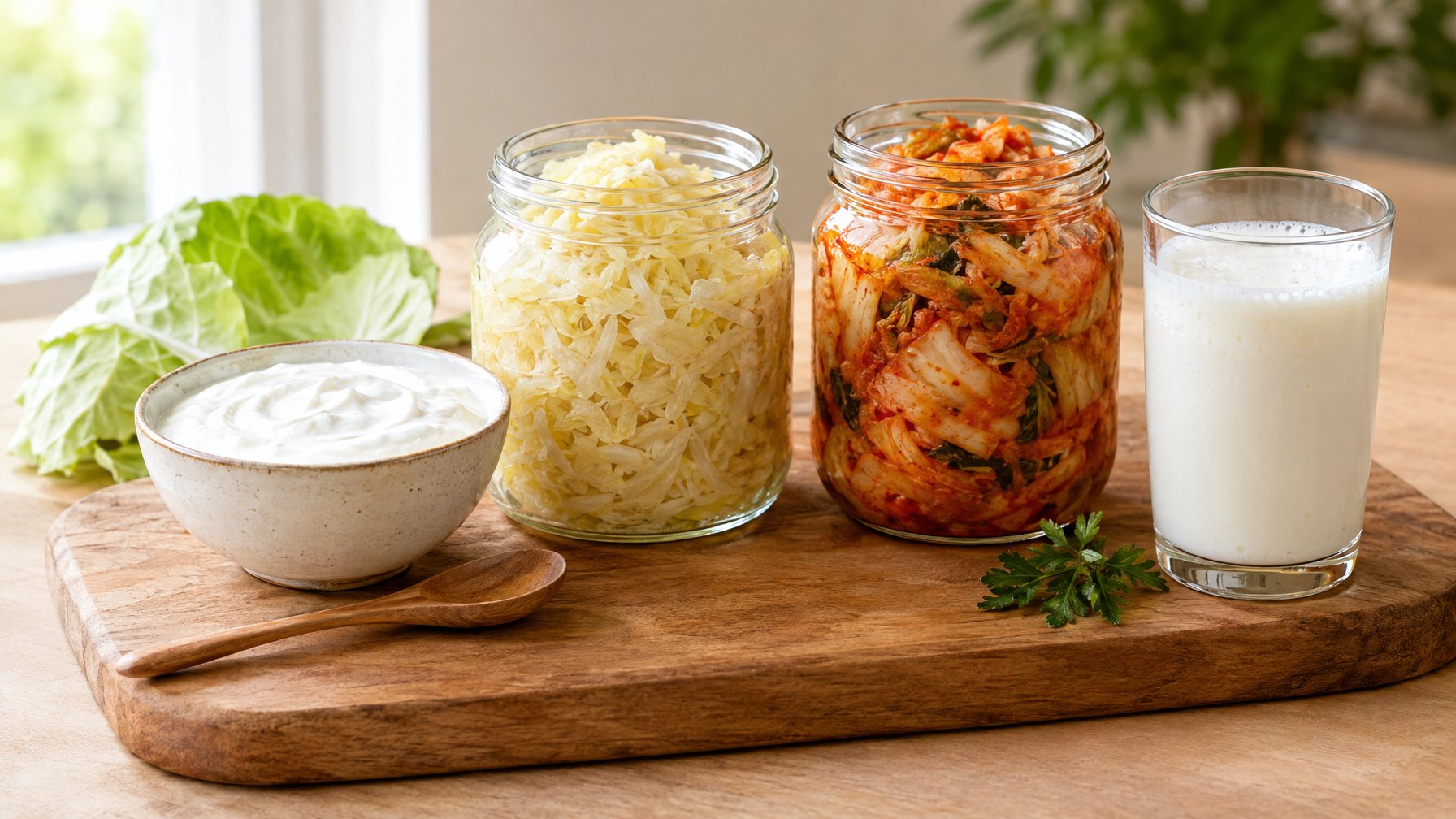
Anyone building a fermented-food habit from scratch has an easy starting point: refrigerated plain yogurt or kefir labeled with live and active cultures. For most beginners, plain kefir or yogurt with live and active cultures is the best first fermented food for gut health, because it is widely available, requires no preparation, and its bacterial content is documented on the label. Sauerkraut, kimchi, and miso follow naturally once the taste and the tolerance are established.
The appeal rests on two different things happening inside these foods. Microbes ferment sugars into lactic acid and other organic acids, which preserves the food, and that same activity leaves behind metabolites that interact with the digestive tract even when the bacteria themselves do not stick around.
Microbial diversity is one of the clearest markers researchers use to describe a healthy gut, and clinicians at Cedars-Sinai point out that eating a variety of foods that support different bacteria is the practical way to build it. Fermented foods fit that pattern as one part of a broader diet, alongside fiber and plant variety.
One caution worth carrying through the whole article: fermented foods are food, not treatment. They do not cure digestive conditions, and anyone managing a diagnosed gut disorder should talk with a clinician before making significant changes.
Key Takeaways
- Refrigerated products labeled "live and active cultures" deliver live microbes; shelf-stable and heat-treated versions usually do not.
- Fermentation contributes both live bacteria and postbiotic metabolites, and both appear to influence digestion and immune signaling.
- Starting with one or two teaspoons daily and increasing over a couple of weeks reduces the risk of gas and bloating.
The Best Choices for a Healthier Gut
Yogurt, kefir, sauerkraut, kimchi, and miso cover the widest range of microbes for the least effort, and all five are sold in mainstream US grocery stores. The distinctions that matter are whether the product was heat-treated after fermentation and how much sodium or added sugar it carries.
Yogurt and Kefir: Accessible Fermented Dairy Options
Fermented dairy is the most standardized category on the shelf. Harvard Health advises looking for Lactobacillus bulgaricus and Streptococcus thermophilus in the ingredient list of yogurt, cheese, and kefir, and notes these products also supply calcium and vitamin D for bone health.
Kefir is fermented milk made with kefir grains, a cluster of bacteria and yeasts. It contains a broader microbial mix than most yogurts and pours thin enough to blend into smoothies or whisk into dressings.
Greek yogurt is strained yogurt, so it still counts as fermented dairy and carries more protein per cup. Plain versions avoid the added sugar that flavored cups often hide. Aged cheeses ferment too, though hard cheese does not deliver the same live-culture load as yogurt.
Sauerkraut, Kimchi, and Fermented Pickles
Fermented vegetables are salt-driven, which means portion control matters more than volume. A tablespoon of sauerkraut on a sandwich or a spoonful of kimchi with eggs is a realistic daily serving.
Homemade sauerkraut is nothing more than shredded cabbage, salt, and time, and fermented cabbage keeps for months where fresh cabbage spoils in weeks. Kimchi adds napa cabbage, radish, scallions, and chili to the same lacto-fermentation principle.
Pickles split into two camps. Fermented pickles sit in a salt brine and sour through bacterial activity; most supermarket pickled vegetables are simply vinegar-packed and heat-sealed, which tastes similar and contains no live cultures.
Miso, Tempeh, and Natto: Fermented Soy Foods
Fermented soybeans cover both flavor and nutrition. Miso, a fermented soybean paste, works as a seasoning; stirring it in at the end of cooking rather than boiling it protects the live cultures.
Tempeh is a fermented soybean cake with an earthy, nutty flavor, described by Harvard as a protein source suited to vegetarian and vegan diets. Because tempeh is almost always cooked before eating, it functions as plant-based protein more than a live-culture food.
Natto is fermented whole soybeans made with Bacillus subtilis , sticky and strongly flavored, and the source of the enzyme nattokinase. Soy and vegetable ferments run high in sodium, so Harvard Health recommends straining or avoiding them with high blood pressure, heart disease, or impaired kidney function.
Kombucha, Water Kefir, Kvass, and Apple Cider Vinegar
Fermented drinks are the easiest place to overshoot on sugar. Kombucha is fermented tea made with a SCOBY, a symbiotic culture of bacteria and yeast; plain or low-sugar versions in small servings make the most sense, since some brands are very sweet.
Water kefir and beet or bread kvass offer dairy-free fizz with milder flavor. Both ferment quickly at room temperature, which is why homemade batches are common.
Apple cider vinegar is a fermentation product dominated by acetic acid. Unfiltered versions contain sediment, though vinegar is not a meaningful probiotic delivery vehicle.
Sourdough bread belongs in this same category of fermented-but-not-live foods: fermentation shapes the flavor and the dough, and baking removes the microbes.
How Fermentation May Support Digestion and the Microbiome
Fermentation contributes two separate things to the gut: live microorganisms that pass through, and the chemical byproducts those microbes left behind in the food. Both appear to influence digestion, nutrient availability, and immune signaling, though the size of the effect varies by food and by person.
What Live Microorganisms and Postbiotics Do
Probiotics are live microorganisms that confer a health benefit when consumed in adequate amounts, and many arrive in fermented foods as lactic acid bacteria such as Lactobacillus. These beneficial bacteria produce acidic byproducts that lower intestinal pH, making the environment less hospitable to harmful microbes. For how food compares with capsules, see probiotic foods vs supplements.
Postbiotics may do more of the work than colonization does. Cedars-Sinai microbiome director Suzanne Devkota describes the thousands of chemical products of fermentation as the most beneficial part, noting that many fermented-food bacteria neither survive nor colonize the gut while their metabolites interact directly with immune cells and the gut barrier and feed existing good bacteria.
A review in Nutrients on fermented foods, health and the gut microbiome concludes that these foods affect the gut microbiome in both the short and long term.
Potential Benefits for Regularity, Nutrient Use, and Immune Function
Fermentation breaks down complex carbohydrates before food reaches the gut, which supports the intestinal barrier and improves nutrient absorption. It also reduces digestive irritants including FODMAPs, phytic acid, and oxalates, and makes the gluten in sourdough easier to digest.
The nutrient side is concrete. Fermented foods supply B vitamins, vitamin K, and digestive enzymes, and fermented vegetables can provide vitamin B12, which plant foods otherwise lack. Natto is a notable source of vitamin K2, and fermented dairy delivers calcium.
On inflammation, one small trial found people eating fermented foods daily for 10 weeks showed lower levels of 19 inflammatory proteins, including interleukin 6. Research on heart health, cholesterol, blood sugar, type 2 diabetes, and the gut-brain connection is ongoing and far from settled.
Why Fiber and Prebiotic Foods Still Matter
Live cultures cannot substitute for the fiber that resident gut bacteria ferment into short-chain fatty acids. Prebiotic foods like onions, garlic, oats, legumes, and bananas feed the microbes already established in the colon — see prebiotic foods for gut health for a beginner list.
The practical pattern pairs a small daily fermented serving with a high-variety, fiber-rich diet. Harvard Health also points to fermented foods as sources of fiber, antioxidants, minerals, and vitamins within a balanced diet that includes protein, grains, fruit, and vegetables.